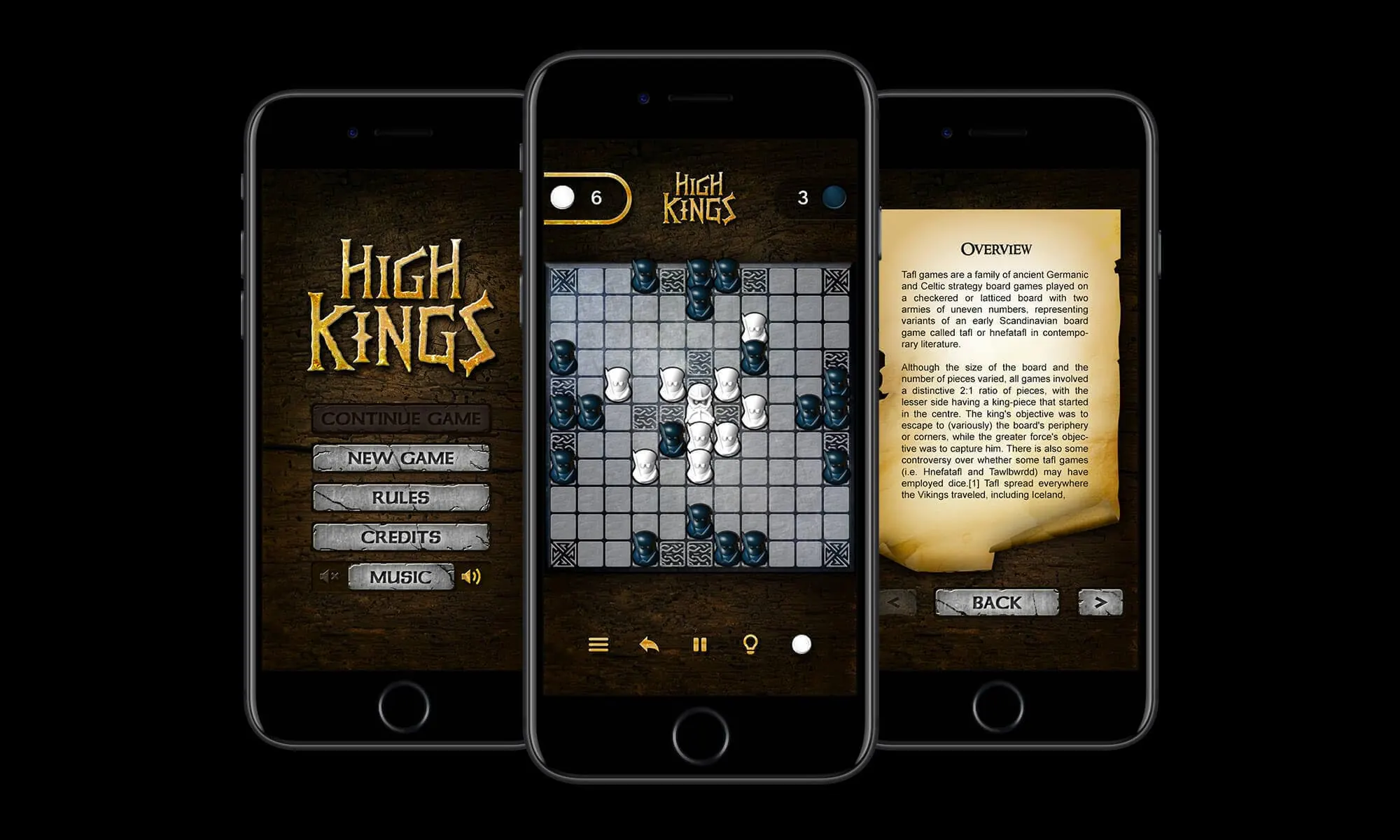
High Kings
Viking chess, rebuilt for the browser
Self-initiated, with thanks to Gordon Rattray and Harry Bell. Original app with Lewis MacKenzie and Jason Frame
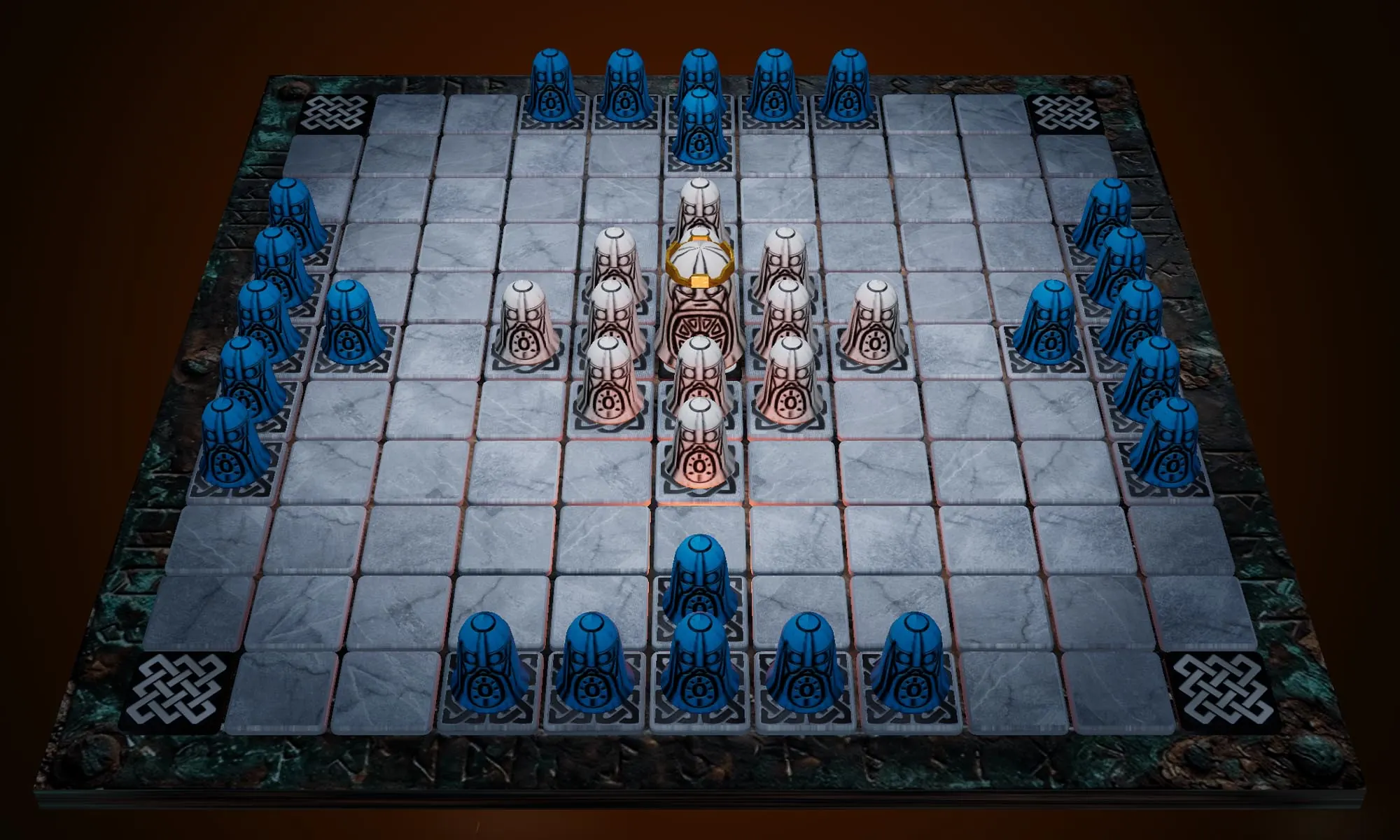
Hnefatafl is a Viking strategy game that predates chess in Scandinavia by centuries. Two unequal forces, a king and his defenders against a larger attacking army, fight it out on a grid. It's a brilliant game, and almost nobody has heard of it.
Years ago I worked with Jason and Lewis on an iOS app to bring it to a wider audience. It was one of those projects I look back on fondly. Good people, good idea, good fun. When I wanted a creative challenge and something to sink my teeth into properly, I kept coming back to it. So I rebuilt it. Not as a continuation of that original work, more as a tribute to it.
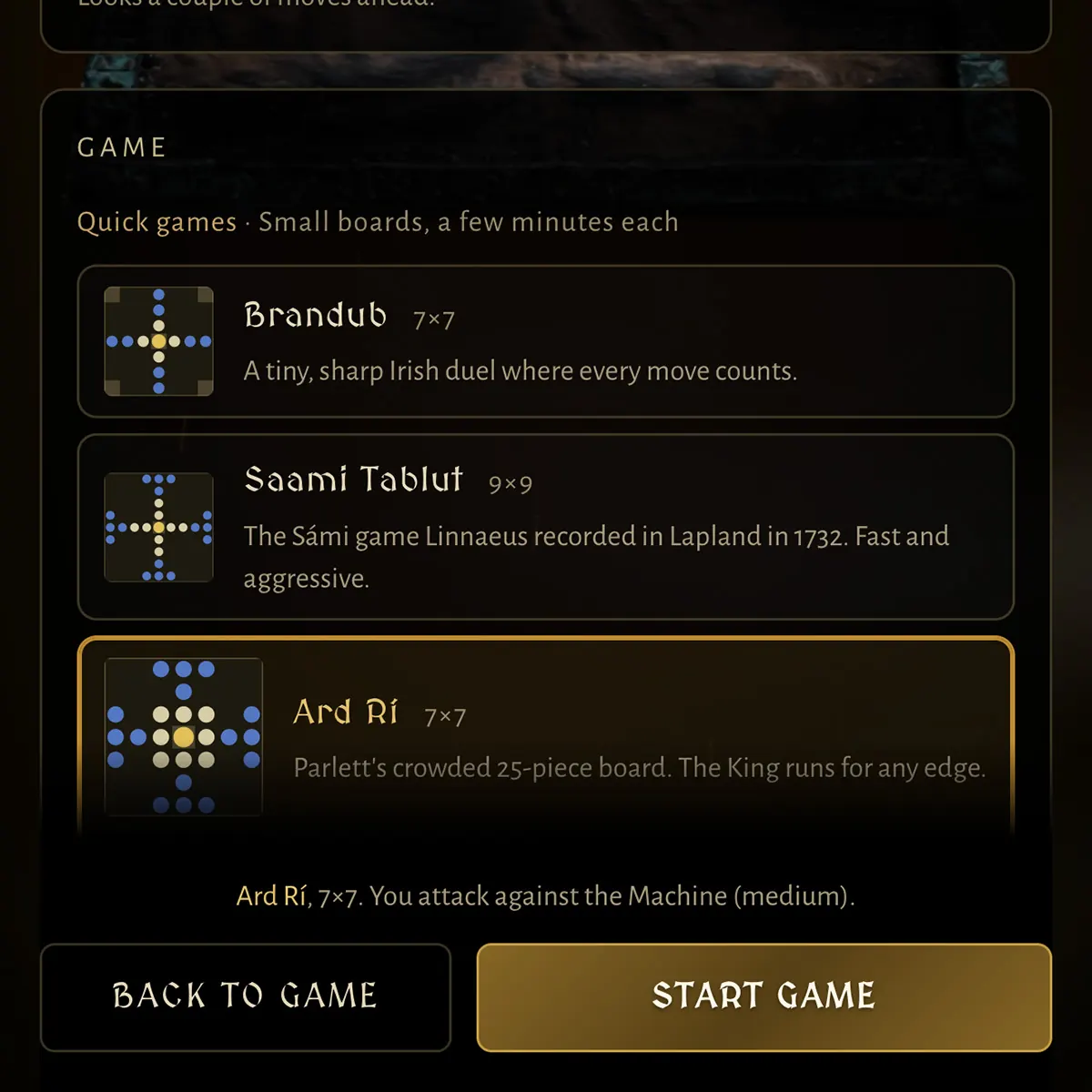
Hnefatafl isn't one game, it's a family of them, and that's where High Kings has changed most. Alongside the historical games, from tiny Irish Brandub up to Alea Evangelii, reconstructed from a 12th-century gospel book and played on 19×19, it now plays the modern rulesets. Copenhagen, the tournament standard. Fetlar. Luk Martens' battle games, Tyr, Thor and Odin, with berserk captures, commanders who leap over pieces and V-men who change sides when they're taken. And Modern Ard Rí, a quick 7×7 game with house rules, where a strong king has to make it to a corner. Fourteen in all, each checked against its published rules so it plays the way it should.
The other big change is the daily challenge. Every day there's a new puzzle on Modern Ard Rí, a win in two, the same for everyone. Solve it to keep your streak going and share your result, Wordle-style. Miss a day and there's a bonus challenge to catch up on it, though that won't count towards the streak.
Then there's the computer opponent. Getting a machine to play hnefatafl well is harder than it sounds. The game is lopsided by design, so each side needs different thinking, and a big board gives it a lot to think about. It now looks ahead in the background without slowing the board down, plays at three levels, and the hardest level is the one that gives you hints.
I've had the help of Gordon Rattray on that. Gordon is a chess master with a real interest in computer opponents: how they play, the technology behind them, and the thinking about what they should be. Having someone who knows that world to think it through with has been a huge help.
I also wanted people to be able to play each other. That meant accounts, a lobby, ratings and a leaderboard, with every move checked by the server so nobody can cheat their way up it.
Almost nobody knows the rules, so there's a tutorial as well, eight short lessons played on the real board. That's where Harry comes in. He's my nephew, he's still in primary school, he's great at hnefatafl, and he tests the app for me. Hard to find a more honest tester.
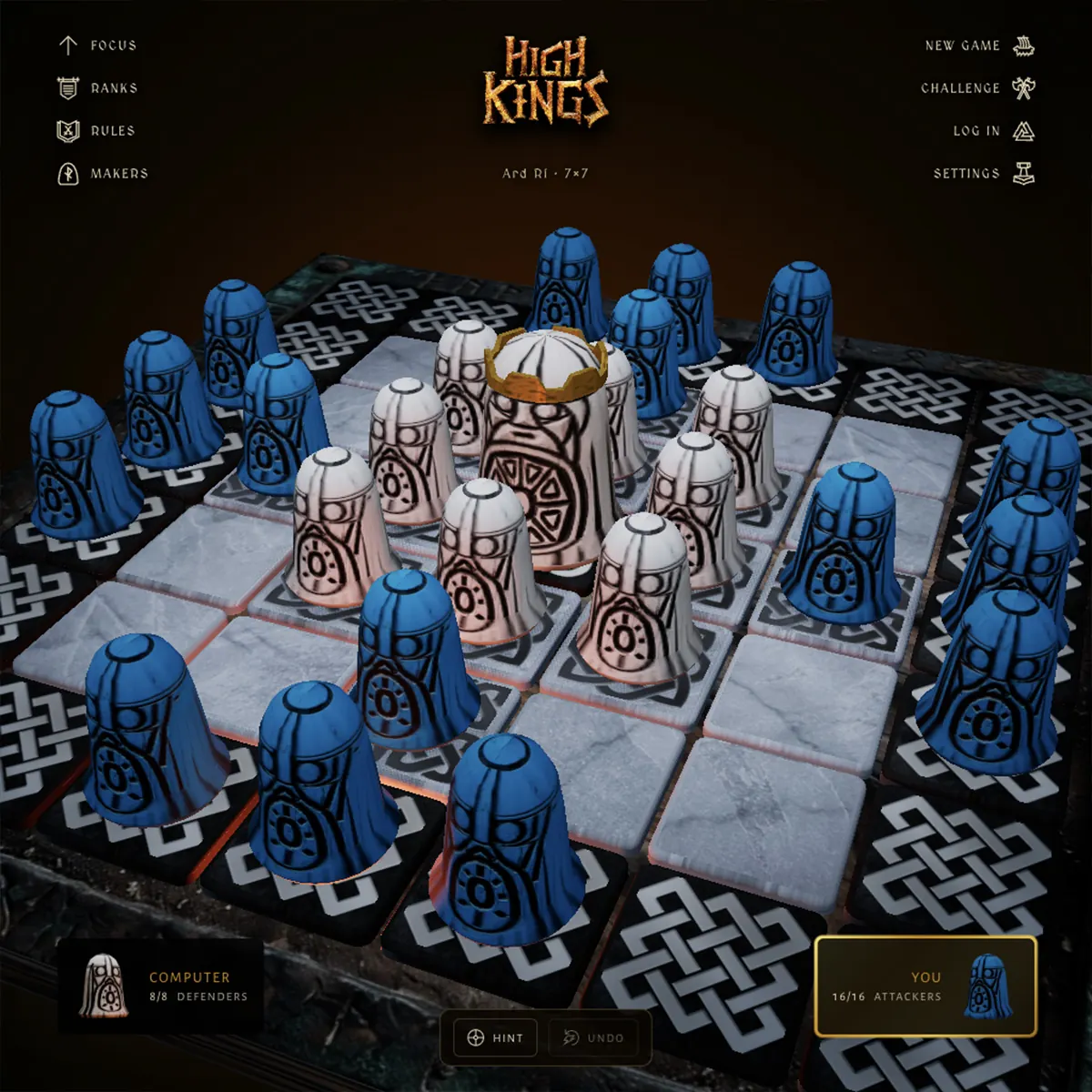
The Norse mythology gave me a lot to work with visually. The board is 3D, carved pieces on marble, and I wanted it to feel weighty and considered without ever becoming gloomy. There's a lighter 2D board for older phones, and the whole game can be played from the keyboard, with moves read out for screen readers. Interface design for a game has different rules from anything else. Every element has to earn its place without distracting from the board.
The original app, for reference.